

7 Things to Know About BPA-Free Containers for Kids
Last Updated: October 25, 2026
Quick Summary
BPA free containers are not automatically safe for kids, because the label only confirms BPA was left out, not which substitute chemical replaced it. Safety depends on the material, the food, and the heat, so use glass for reheating and code 5 PP plastic for cold and dry storage.
- The FDA banned BPA from baby bottles and sippy cups in 2012.
- BPA-free plastics may use substitutes such as BPS and BPF, which are flagged for further study.
- Microwaving food in plastic raises chemical migration, especially with fatty or acidic foods.
- Replace plastic containers when scratched, cloudy, stained, smelly, or no longer sealing.
- Stainless steel is best for cold school lunches and water bottles; glass is best for reheating at home.
Table of Contents
- What BPA-Free Really Means on a Kids' Container Label
- Why BPA Exposure Is a Concern for Infants and Young Children
- Microwaving Food in Plastic Containers: What Heat Does to the Plastic
- Plastic Food Container Recycling Codes and What They Reveal
- Stainless Steel vs. Plastic Lunch Containers for School and Daycare
- When to Replace Plastic Food Containers (and the Wear Signs That Matter)
- Building a Kid-Safe Storage Setup with DecorGlore Containers
- Frequently Asked Questions
What BPA-Free Really Means on a Kids' Container Label
The phrase "bpa free containers" is a label claim, not a safety guarantee. It means the manufacturer states the product was made without bisphenol A, the industrial chemical once common in polycarbonate bottles and epoxy can linings. What the label does not tell you is which chemical replaced it, or how the container behaves when it gets hot.
That gap matters more than most parents realize. The U.S. Food and Drug Administration banned BPA from baby bottles and sippy cups in 2012, following voluntary removal by several large manufacturers, as documented in the FDA's BPA regulatory history. The ban closed one door. It did not settle the question of whether the containers on the shelf today are safe for kids.
At DecorGlore, we sell food storage containers, so we have a commercial interest in this conversation. We also have a responsibility to be straight with you: the honest answer to "are BPA-free containers safe for kids" is that it depends on the material, the food, and the heat. Below, we break down what the science actually supports, what it leaves open, and how to choose containers you can feel good about.
Bisphenol A, BPS and BPF: What the Label Does Not Tell You
Bisphenol A (BPA) is an industrial chemical used since the 1950s to make polycarbonate plastics and epoxy resins. It can migrate into food and drink, particularly when the container is heated, scratched, or holding acidic contents.
The substitution problem is the part most labels hide. Research summarized by the Center for Research on BPA alternatives warns that BPA-free plastics may use substitutes such as BPS and BPF, and that BPA-free labeling alone does not establish a product is safe. These are chemical cousins of BPA, structurally similar enough that regulators and researchers have flagged them for further study rather than cleared them.
So when you pick up a container and see "BPA-free" in large type, you are reading a single-chemical claim. You are not reading a statement about BPS, BPF, phthalates, or the plastic's heat tolerance.
Why BPA Exposure Is a Concern for Infants and Young Children
Children are not small adults in exposure terms. They eat and drink more relative to body weight, their systems are still developing, and they put things in their mouths. Public-health guidance reflects that.
The Washington State Department of Health guidance on plastics recommends BPA-free baby bottles, pacifiers, and toys, and specifically suggests switching to glass or porcelain, particularly for hot food or liquids. That last clause is the practical heart of the matter: heat is the variable you control.
On the science itself, regulators and clinicians do not fully agree. The FDA maintains that current approved uses of BPA in food containers and packaging are safe and says it continues to monitor the research, while Mayo Clinic's overview of BPA concerns notes possible health effects are a concern, particularly for fetuses, infants, and children. The concern centers on endocrine activity: BPA can mimic hormones, and developmental windows matter.
Here is our read: you do not need to panic, and you do not need to throw out every plastic item in the kitchen. You do need to stop treating "BPA-free" as a finish line.
Microwaving Food in Plastic Containers: What Heat Does to the Plastic
Heat is the single biggest lever you have. Microwaving food in plastic containers increases the potential for chemical migration into food, especially with fatty or acidic foods and with containers not labeled microwave-safe.
Three rules handle most of the risk:
- Transfer before you heat. Move food to glass or ceramic for reheating. This one habit eliminates the microwave question entirely.
- Never microwave a container that is not labeled microwave-safe, no matter how convenient it is.
- Let food cool slightly before transferring into plastic for storage, and never pour boiling liquid into a plastic container.
Watch out: a container that survived the microwave a hundred times is not proof of safety. Wear and heat damage accumulate silently, and a container can look fine while its surface has degraded.
Plastic Food Container Recycling Codes and What They Reveal
The number inside the triangle on the bottom of a container is a resin identification code, not a safety rating. It tells you what plastic the item is made from, which in turn hints at how it should be used.
| Code | Plastic | Common kitchen use | Our take for kids' food |
|---|---|---|---|
| 1 | PET | Water bottles, some food tubs | Single use only; do not refill or heat |
| 2 | HDPE | Milk jugs, some storage tubs | Generally sturdy; not for hot food |
| 3 | PVC | Rare in food storage | Avoid for food contact |
| 4 | LDPE | Bags, flexible lids | Fine for cold storage |
| 5 | PP | Most lunch boxes, yogurt tubs, our jars | Good all-rounder; check microwave labeling |
| 6 | PS | Foam clamshells, disposable cups | Avoid for hot food and drinks |
| 7 | Other | Includes polycarbonate | Treat with caution; may contain BPA or substitutes |
Code 7 is the one to slow down on. Polycarbonate falls under it, and so do a range of newer plastics. If a container is code 7 and unlabeled, you cannot tell from the number alone what is in it.
Stainless Steel vs. Plastic Lunch Containers for School and Daycare
For school and daycare, the choice usually comes down to weight, durability, and whether the container goes in a microwave. But 'lunch container' is not one product category. A leakproof bento box, a water bottle, a snack cup, and a baby food jar each have different demands.
Multipurpose Food Storage Containers Set - Clear Jars with Lids for Cereal →
Stainless steel wins on chemical inertness. It does not leach, it does not absorb odors, and it survives years of being dropped on concrete.
Plastic wins on weight, cost, and microwave convenience when properly labeled. Code 5 polypropylene lunch boxes are the practical default for most families, provided you do not reheat in them and you replace them when scratched.
Glass is the best material for home food storage and reheating, but it is a poor fit for school lunches and daycare because of breakage risk and weight. Use glass at home where you control handling, and reserve plastic or stainless steel for the bag.
A container-by-container guide:
| Use | Best default | Acceptable alternative | Avoid |
|---|---|---|---|
| School lunch box (cold) | Stainless steel | Code 5 PP plastic | Code 7 unlabeled plastic |
| School lunch (to be reheated) | Code 5 PP labeled microwave-safe, food transferred to plate | Glass at home before packing | Microwaving any unlabeled plastic |
| Water bottle | Stainless steel | Code 5 PP or Tritan-type plastic | Code 1 PET refilled repeatedly |
| Snack containers | Code 5 PP plastic | Stainless steel | Code 6 PS foam |
| Baby food storage | Glass | Code 5 PP | Code 7 polycarbonate |
| Home leftovers (reheating) | Glass | Ceramic | Any plastic not labeled microwave-safe |
Our recommendation: stainless steel for cold lunches and water bottles, code 5 polypropylene for younger children and any lunch that needs reheating (with the food transferred to a plate first), and glass for home storage and reheating. Neither material is dangerous. The failure mode is using either one wrong.
When to Replace Plastic Food Containers (and the Wear Signs That Matter)
Replace plastic food containers when the surface is scratched, cloudy, stained, or smells retained food, or when the lid no longer seals. Those are the signs that the surface has degraded and that cleaning is no longer reaching everywhere it needs to.
A practical replacement checklist:
- Visible scratches inside the container, especially on the base
- Cloudiness or a white haze that does not wash off
- Permanent stains or lingering odor after washing
- Warping, cracking, or a lid that pops off
- Container has been microwaved repeatedly despite not being labeled for it
- No recycling code visible and origin unknown
For deeper guidance on extending the life of your pantry storage, our guide on how to keep pantry staples fresh covers cleaning, sealing, and rotation in detail.
Building a Kid-Safe Storage Setup with DecorGlore Containers
A kid-safe kitchen is mostly a design problem, not a shopping problem. Put the safe materials where children can reach them, keep the heat-sensitive items out of their path, and label everything so nobody has to guess.
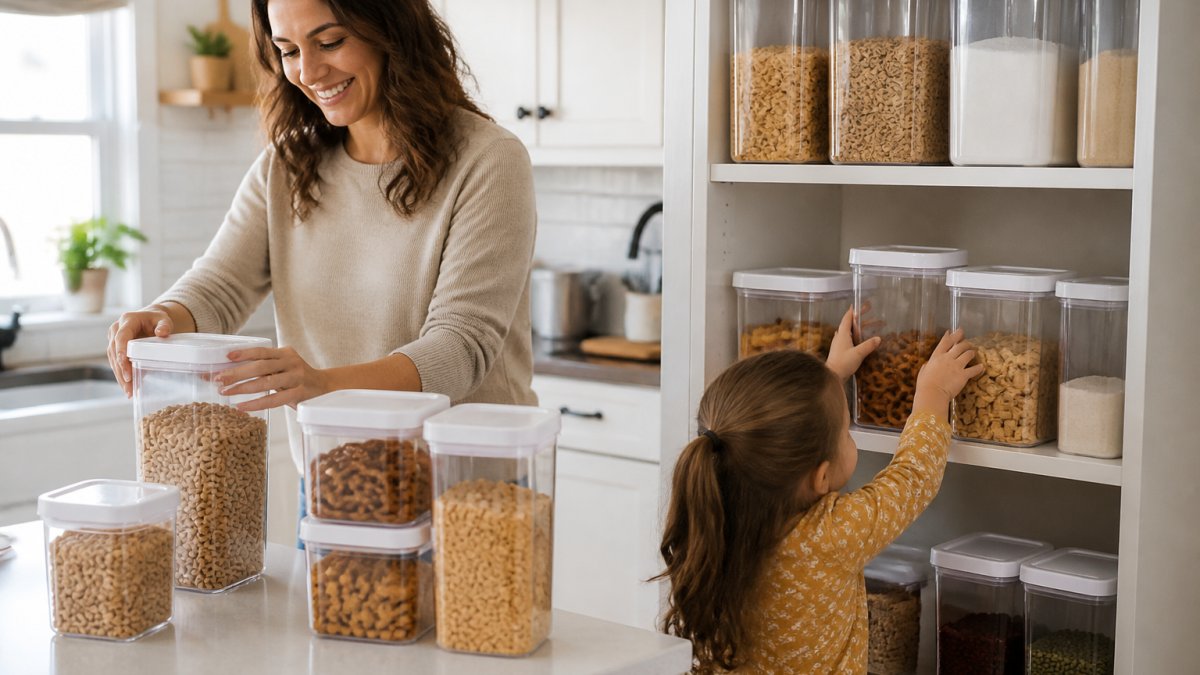
Our multipurpose food storage containers set is made from durable PP plastic, which carries resin code 5, with seal-tight lids and a stackable design in five sizes from 460ml to 1900ml. For dry goods, cereal, and snacks, that is the right material for the job: no heat involved, no liquid sitting in it for days, and a clear body so you can see what is inside without opening the lid. If your kitchen is tight, our small apartment kitchen organization guide walks through stacking and cabinet layout step by step.

One honest limitation: these are dry-goods and cold-storage containers. They are not a replacement for glass when you are reheating leftovers. Use them for what they are built for and they will serve you well.
If you have questions about materials, sizes, or care before you buy, our FAQ page answers the ones customers ask most.
The uncomfortable truth about bpa free containers is that the label answers a narrower question than most parents think it does.
That is the setup we build our containers for. DecorGlore's storage jars give you a seal-tight lid, a stackable footprint that fits small cabinets, and a clear body so you can see what needs restocking, all in BPA-free PP plastic sized from 460ml to 1900ml.
Frequently Asked Questions
Are BPA-free containers safe for kids?
BPA-free containers remove bisphenol A from the material, but the label alone does not guarantee safety. Some BPA-free plastics use substitutes such as BPS and BPF, and the Center for Research cautions that BPA-free labeling does not establish that a product is safe. For most families, BPA-free containers are a reasonable choice for cold and room-temperature foods. For hot food or liquids, the Washington State Department of Health recommends switching to glass or porcelain.
Can BPA-free plastic containers release chemicals into food?
Chemical migration can happen with any plastic food contact material, and heat, scratches and wear increase the risk. The Washington State Department of Health advises extra care with hot food or liquids in plastic, and recommends glass or porcelain particularly in those cases. Practical steps that reduce exposure include letting food cool before storage, avoiding microwave reheating in plastic, and retiring containers once the surface is visibly scratched or cloudy.
Is it safe to microwave food in BPA-free plastic containers?
Microwaving food in plastic containers is the use case where public-health guidance is most cautious. Washington State Department of Health recommends glass or porcelain particularly for hot food or liquids. If you do reheat in plastic, transfer to a glass or ceramic dish when possible, and never microwave a container that is scratched or has no microwave-safe marking. For kids' meals, reheating in glass and serving in a BPA-free container is the lower-risk routine.
When should I replace plastic food containers?
Replace plastic food containers when you see scratches, cloudiness, cracks, a lingering smell or a lid that no longer seals. Scratched plastic gives bacteria more places to hide and is the surface most likely to shed material into food. A practical rule for families is to inspect kids' containers every few months and replace any that have gone through heavy dishwasher use, repeated reheating or visible wear. Stainless steel and glass last longer and avoid the replacement cycle entirely.
