

How to Keep Pantry Staples Fresh: A Complete Guide
Last Updated: October 23, 2026
Quick Summary
To keep pantry staples fresh, control the four things that spoil them: moisture, heat, light, and air. Move flour, rice, and spices out of their original bags and into airtight containers stored in a cool, dark cupboard away from the oven and direct sun. Then use the oldest first and check your stock about once a month.
- Moisture clumps flour and grows mould, while heat turns the oils in flour and spices rancid.
- Whole-wheat flour spoils faster than white because the oils in the bran go rancid.
- Store brown rice in the fridge or freezer if you plan to keep it more than a few months.
- Keep spices in small airtight glass jars away from the stove, since ground spices fade faster than whole ones.
- Freeze new flour, rice, and grains for about 48 hours after purchase to stop pest eggs hatching.
Table of Contents
- How to Keep Pantry Staples Fresh: The Basics That Actually Matter
- How to Store Flour So It Stays Fresh Longer
- How to Store Rice Long Term Without Losing Quality
- How to Store Spices So They Keep Their Flavor
- Best Containers for Pantry Storage: What to Look For
- How to Keep Pantry Staples Fresh With a Simple Rotation System
- Pest Prevention and Freshness Checks: What to Watch For
- Conclusion
- Frequently Asked Questions
How to Keep Pantry Staples Fresh: The Basics That Actually Matter
Knowing how to keep pantry staples fresh comes down to controlling four things: moisture, heat, light, and air. Get those right and flour, rice, and spices stay good for months longer than most people expect. This guide from DecorGlore walks through each staple, the container choices that matter, and a rotation system that stops good food from going stale in the back of the cupboard.
The biggest mistake we see is buying big bags of flour or rice and leaving them rolled up in the original packaging. It lets in humid air and pantry pests, and it does nothing for flavour. FoodSafety.gov guidance on dry storage recommends keeping dry goods in a cool, dry spot in sealed containers, not in the bag they came in.
Below, we break down storage by ingredient, the container features worth paying for, and a simple rotation habit that keeps your pantry working.
The Four Enemies of Pantry Staples
Moisture, heat, light, and air are what turn fresh staples stale. Moisture causes clumping and mould. Heat speeds up the breakdown of fats in flour and the oils in spices. Light fades colour and flavour.
A cool, dry place is the standard advice for a reason. Aim for a spot away from the oven, the dishwasher, and direct sun. If you keep staples above the stove or beside a sunny window, you are working against yourself.
- Moisture: clumps flour, sours grains, grows mould
- Heat: shortens shelf life, turns oils rancid
- Light: fades colour and aroma in spices
- Air: oxidises grains and dulls flavour
How to Store Flour So It Stays Fresh Longer
Flour is the pantry staple that spoils fastest, so it deserves the most attention.
Here is how to store flour so it stays fresh:
- Transfer it out of the paper bag into an airtight container
- Keep it in a cool, dark cupboard away from the oven
- Label it with the date you opened it
- For long storage, keep a portion in the freezer in a sealed bag
A common mistake is topping up an old batch with new flour. That mixes old and new and makes it impossible to know what is actually fresh.
Whole-grain flours are best used within a few months of opening. White flour keeps longer. If you bake only now and then, buy smaller bags.
How to Store Rice Long Term Without Losing Quality
Rice keeps well when it stays dry, and the main threats are moisture and pantry pests. White rice stores longer than brown because brown rice still has its oil-rich bran layer, which turns rancid over time.
To store rice long term:
- Move it into an airtight container, not the bag
- Keep it cool and dry, away from heat and steam
- Store brown rice in the fridge or freezer for longer keeping
- Check for tiny holes in bags, a sign of pests
For very long storage, a sealed container in a cool cupboard works for white rice. Brown rice is better refrigerated if you plan to keep it more than a few months.
How to Store Spices So They Keep Their Flavor
Spices lose their punch through heat, light, and air, so store them in small airtight jars away from the stove. Ground spices fade faster than whole ones.
How to store spices well:
- Keep them in airtight glass jars, not open shakers
- Store away from heat, light, and steam
- Buy whole spices and grind as needed for longer life
- Label with the date and replace when aroma fades
To test a spice, smell it. If it smells flat or dusty, it has lost its flavour and will not do much for your cooking. Whole spices like peppercorns and cumin seeds hold their flavour far longer than ground versions.
Multipurpose Food Storage Containers Set - Clear Jars with Lids for Cereal →
Best Containers for Pantry Storage: What to Look For
The best containers for pantry storage are airtight, stackable, and clear, so you can see what you have and seal out moisture and pests. The seal matters more than the shape.
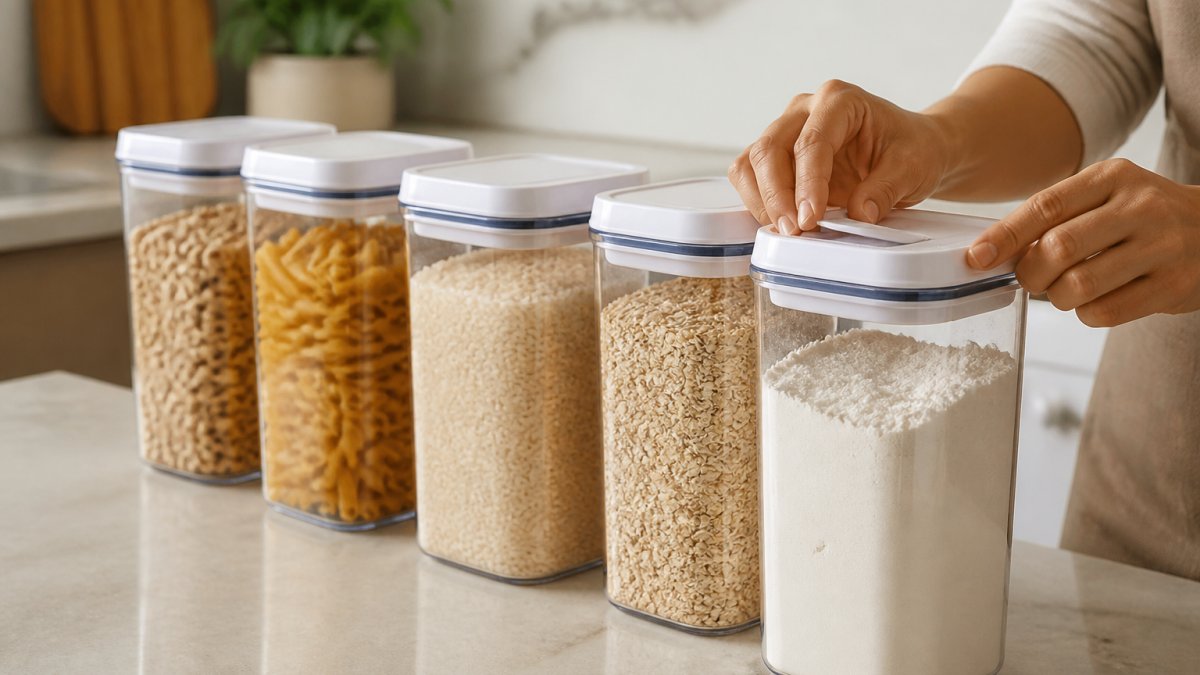
Look for these features:
- A tight seal: a silicone or rubber gasket that closes fully
- Clear material: so you can check levels without opening
- Stackable design: to save cabinet space
- Food-safe plastic or glass: BPA-free if you choose plastic
Our Multipurpose Food Storage Containers Set is built around these points.

| Feature | Why It Matters |
|---|---|
| Airtight seal | Keeps out moisture and pests |
| Clear body | Shows levels without opening |
| Stackable shape | Saves cabinet space |
| BPA-free plastic | Food-safe for family use |
| Wide opening | Easy to fill and clean |
How to Keep Pantry Staples Fresh With a Simple Rotation System
A rotation system is the habit that keeps your whole pantry fresh, and it takes about five minutes a month. The idea is simple: use the oldest first and always know what you have.
Try this routine:
- First in, first out. Put new items behind older ones.
- Label every container with the date you filled it.
- Do a monthly check. Pull forward anything close to its date.
- Keep a running list of what you use most.
- Shop from the back so nothing sits forgotten.
This is how to keep pantry staples fresh without thinking about it daily. When you can see everything in clear containers, you spot the half-used bag of rice before it goes stale, not after.
Pest Prevention and Freshness Checks: What to Watch For
Pests and staleness are linked, and both are easier to prevent than to fix. Most pantry losses from insects are not dramatic infestations, they start with a single opened bag of flour or a box of crackers that sat too long, and spread from there. This is the part of pantry keeping that most guides skip, and it is where a little attention pays off most.
The common pantry pests
The two you are most likely to meet are pantry moths (often called Indian meal moths) and small beetles such as flour beetles and weevils. Pantry moths are fliers that lay eggs in dry goods; the larvae are what you see as webbing or small worms in flour and cereal. Beetles are crawlers that get into bags through tiny gaps and multiply in grains and pasta.
Inspection: what to look for
Check your pantry on a regular schedule, monthly is a reasonable habit, and look for:
- Tiny holes in bags or boxes, which can be entry points or exit holes
- Webbing or silken threads in the corners of containers or bags, a sign of moth larvae
- Small live insects or shed skins in the bottom of containers
- Clumping, musty smell, or discoloration in flour, which can indicate moisture and mold as well as pests
A quick freshness check before cooking saves a ruined meal. Smell the flour, look at the rice, and taste a pinch of spice. Your senses catch most quality problems before they reach the plate.
Prevention: the practical steps
- Store everything in sealed containers. Bags and cardboard boxes are not pest-proof; a gasketed container is.
- Freeze new dry goods for a few days before storing. A common practice is to freeze flour, rice, and grains for about 48 hours after purchase to stop any eggs or larvae from hatching, then let the container come to room temperature before opening to avoid condensation.
- Keep the cupboard clean and dry. Wipe up spills, vacuum crumbs, and check corners where flour dust collects.
- Use oldest first. Pests are more likely to establish in an item that has sat untouched for months.
If you find pests
If you find insects in one container, do not just throw out that item and move on. Check nearby containers, especially open bags and boxes, and discard anything with visible insects, webbing, or damage. Clean the shelf with soap and water and let it dry fully before restocking. Safe disposal means sealing the infested food in a bag and putting it in an outdoor bin, not the kitchen trash, so pests do not spread back into the pantry.
Stale versus unsafe
Not every off-flavor means the food is unsafe. Stale crackers, flat spices, and slightly rancid nuts are quality problems, they will not make you sick, but they will not do your cooking any favors. Mold, however, is a safety issue: discard moldy flour, grains, or bread products rather than trying to salvage them, because mold can produce toxins that are not destroyed by cooking.
Conclusion
Keeping a pantry fresh is less about fancy gear and more about a few steady habits: seal it, keep it cool and dark, and use the oldest first. That is the whole system, and it works for flour, rice, spices, and everything in between.
If your cupboard is a jumble of half-open bags, that is the place to start. DecorGlore's airtight, stackable, BPA-free containers make the switch easy.
Frequently Asked Questions
How long do common pantry staples stay fresh?
Shelf life depends on the staple and how it is stored. White rice and dried pasta typically keep for a year or more in airtight containers, while white flour lasts six to twelve months and whole wheat flour closer to three to six months. Spices hold their flavor for about one to three years. Opened packages age faster than unopened ones, so transfer dry goods to sealed containers and label them with the date you opened them.
What are the best containers for pantry storage?
Look for containers with a true airtight seal, a wide opening for scooping, and a stackable shape that fits your cabinet depth. Clear containers let you check levels without opening the lid, which helps with rotation. DecorGlore's multipurpose food storage containers come in five sizes from 460ml to 1900ml with seal-tight lids and a stackable design, so flour, rice, cereal, and snacks each get a container that fits.
How can you tell if a pantry staple has gone bad?
Start with your senses. Flour and grains that smell musty or sour, spices that have lost their aroma, and pasta that has changed color should be discarded. Check for clumping, which signals moisture, and for webbing or small holes in packaging, which point to pests. Oils that smell bitter or rancid are past their best. When in doubt about a staple that shows mold or pest activity, throw it out rather than trying to salvage it.
Do opened pantry staples last as long as unopened ones?
No. Once a package is opened, oxygen and humidity start working on the contents, so the clock runs faster. An unopened bag of flour may last a year, but once opened it is better used within a few months. Transferring opened dry goods into airtight containers slows that decline and keeps pests out. Write the opening date on the container so you know when to use it first.
